Nitrogen Pressure Decay Testing
Nitrogen testing is the first step before vacuum or refrigerant charge — it confirms the A/C system holds pressure before you spend money on refrigerant. Refrigerant is expensive. If the system is leaking, we find it with nitrogen first.
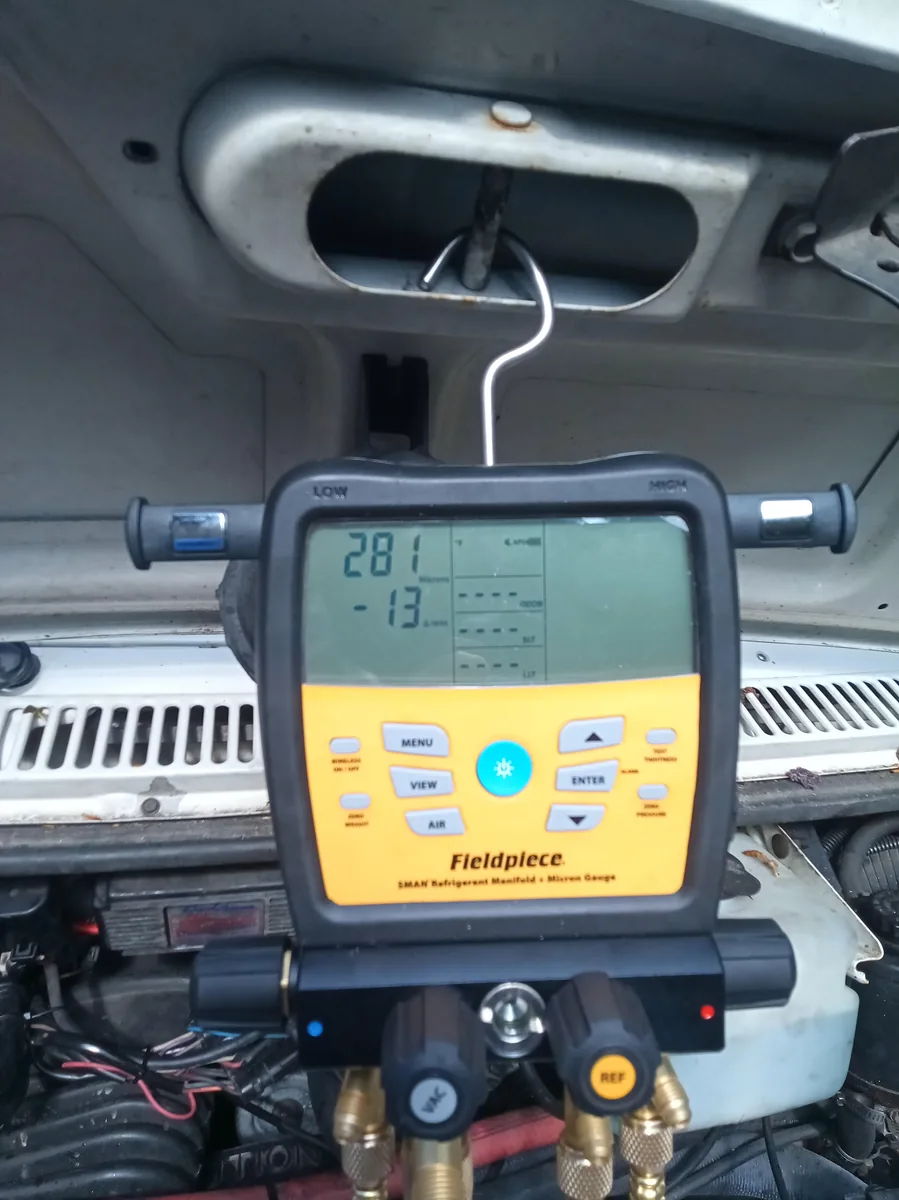
Nitrogen Pressure Decay Testing
How nitrogen testing works
Dry nitrogen (non-corrosive, inert, readily available) is introduced to the A/C system and pressurized. The system is then sealed and monitored for pressure decay over a timed hold period. If pressure drops, there is a leak — and we locate it before proceeding.
Why nitrogen and not air?
Compressed air contains moisture and contaminants. Introducing air to an A/C system for pressure testing defeats the purpose — you're re-introducing what you're trying to remove. Dry nitrogen is free of moisture and is safe to use as a pressure test medium without risk of contamination.
Leak location
If the decay test reveals a leak, we can assist in locating it — using electronic detection around fittings, connections, and known failure points. The repair is then completed before vacuum and charge proceed.
Common Questions
Is nitrogen testing required before every charge?
Can nitrogen testing damage anything?
Includes
- System pressurized with dry nitrogen
- Timed pressure decay test
- Leak location assistance if decay detected
- Documentation of test results
Charges for Service
Contact for quote
Every job is different — vehicle, refrigerant type, location, and condition all factor in. We give a clear quote up front so you know the cost before we start. On-site service usually beats the total cost of a shop visit once you add in transport and down-time.
Call 250.351.6766 for a QuoteRelated Services
See the full service menu with pricing
All Services