Vehicle A/C Vacuum Evacuation
Vacuum evacuation is not optional after an A/C repair — it is the critical step that removes moisture, air, and non-condensable gases from the system before refrigerant is added. Without it, moisture reacts with refrigerant oil to form organic acid that destroys compressor internals within one to two years.
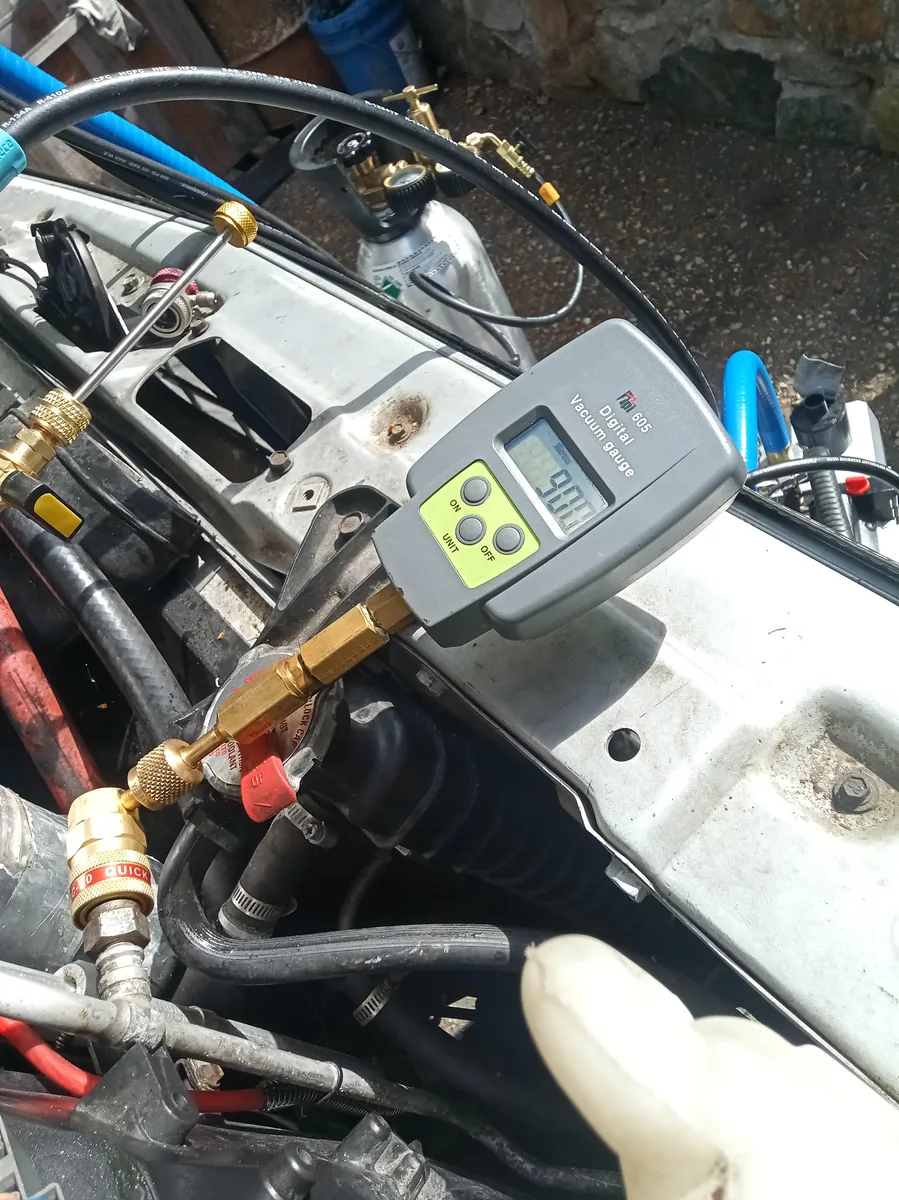
System Vacuum Evacuation
What "deep vacuum" actually means
Many shops "pull vacuum" by running a pump for 30 minutes and calling it done. That is not a deep vacuum — it's a guess. A true deep vacuum is measured in microns using a micron gauge, with a target of 1000 microns or below. At that depth, water boils off at room temperature and is drawn out of the system completely.
Fieldpiece SMAN equipment
We use a Fieldpiece SMAN manifold with a built-in micron gauge. The target vacuum is measured in real time and logged — not estimated. After evacuation, a decay hold test confirms no leaks exist before any refrigerant is loaded. If the system doesn't hold vacuum, we catch it before you spend money on refrigerant.
When is vacuum evacuation required?
Any time the A/C system is opened — compressor replacement, condenser replacement, evaporator replacement, hose replacement, or any fitting that exposes the refrigerant circuit to atmosphere. Even a few minutes of exposure introduces enough moisture to damage a new compressor. This is also why we always perform nitrogen pressure testing before evacuation.
Common Questions
How long does vacuum evacuation take?
Can I skip vacuum evacuation on a small repair?
Includes
- Deep vacuum to ≤1000 microns target
- Micron gauge monitoring throughout evacuation
- Vacuum decay hold test before charge
- Graphed pressure data (emailed)
Charges for Service
Contact for quote
Every job is different — vehicle, refrigerant type, location, and condition all factor in. We give a clear quote up front so you know the cost before we start. On-site service usually beats the total cost of a shop visit once you add in transport and down-time.
Call 250.351.6766 for a QuoteRelated Services
See the full service menu with pricing
All Services